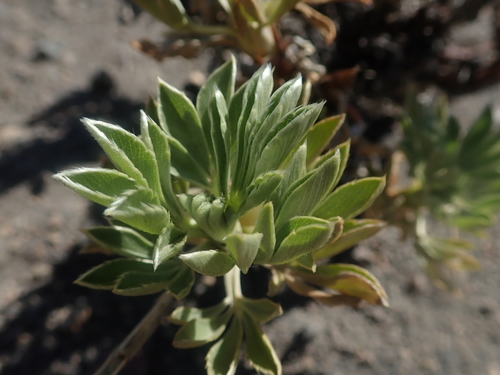
Acaena alpina is a low, hardy perennial subshrub from the Andes of Chile and Argentina, growing from a rhizome to 8 to 30 cm tall at high altitude. It tolerates a wide range of climates, so the key is to give it sun or light shade, free-draining soil and minimal fuss.
Family
Rosaceae (Rose family)
Grows as
Shrub, Perennial
Light
Full sun
Water
Water moderately while establishing, then let the soil dry between waterings; it tolerates dry seasons.
Soil
Well-drained, gritty or stony mineral soil.
Temperature
Hardy to cold; tolerates both hot and cold, comfortable in mild temperate conditions; protect from waterlogging in winter.
How easy
Easy
Native range
C. & S. Chile to W. & S. Argentina
Climate
temperate
About
Acaena alpina is a perennial shrub of the genus Acaena known for its hardiness and durability. A. alpina is found throughout central Chile and Argentina. It can withstand a wide range of climates, including that of the Andes, where it is commonly found. A. alpina can withstand both hot and cold temperatures as well as wet and dry seasons, though it preferentially grows at high altitudes. A. alpina was originally typified by Eduard Friedrich Poeppig and Wilhelm Gerhard Walpers in 1843.
Where it grows
Acaena alpina is a shrub found along the mountain ranges of South America. A. alpina is mainly distributed throughout Chile and Argentina, specifically along the Andes mountain range. This organism is also found along vegetation belts in South America, specifically along the 33rd parallel south and most commonly at an elevation of 2100 m to 2500 m.
Uses
Acaena alpina and various other species belonging to the genus Acaena are known as "cepacaballo" or "cadillo" in Chile. A. alpina is edible. Furthermore, many species of the Acaena genus are purported to have medicinal properties. For example, Acaena splendens is often used to treat fever and inflammation.
Text excerpted from the Wikipedia article Acaena alpina by its contributors, under CC BY-SA 4.0; the excerpts and the care summary drawn from them are shared under the same licence.
The care summary was written by AI (Claude, Anthropic) from the sources on this page, with general growing knowledge where they are silent. Check before relying on it.
Life form, climate and native range: World Checklist of Vascular Plants, Royal Botanic Gardens, Kew (CC BY 3.0), reformatted; see Plants of the World Online.