
Plant Wiki

The open plant encyclopedia

Know any plant.
Grow it well.

Snap a photo or search by any name to see how to care for it, where it comes from, whether it's safe, and a 3D model you can turn.

  • 13,000+plants with full pages
  • 365,000+plant species worldwide
  • 220+countries covered

Common in

See all

The plants people record most in your country, and ones that grow there wild.
What do you want to do?

Popular plants

Browse all plants

See them in 3D

All plants in 3D

Browse plants

Filter by what you want to do, shape, origin, country, care and safety.

Plant Wiki › Browse plants

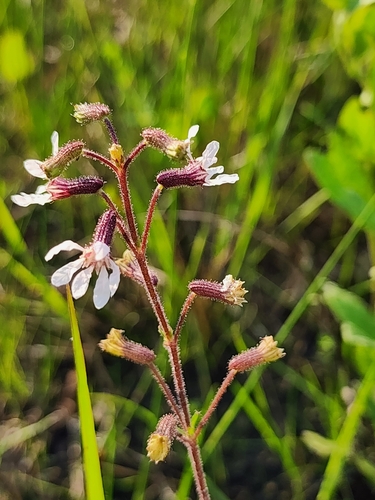
Tropical waxweed

Cuphea aspera

Tropical waxweed
Photo: Scott Allen Davis, CC BY 4.0
Family
Lythraceae (Loosestrife family)
Grows as
Perennial
Native range
Florida
Climate
subtropical

About

Cuphea aspera is a species of flowering plant in the loosestrife family known by the common names tropical waxweed, Chapman's waxweed, and Apalachicola waxweed. It is endemic to Florida in the United States, where it is limited to Gulf and Franklin Counties on the central Florida Panhandle. It has likely been extirpated from Calhoun County.

This perennial herb grows up to about 40 centimeters tall from a woody, branching rootstock. The stems are coated in white hairs and purplish glandular hairs. The oppositely arranged or whorled leaves are each up to 2.5 centimeters long. The opposite or whorled flowers have lavender or pink petals and reddish sepals. Blooming occurs in June and July. This plant is somewhat similar to the nonnative Colombian waxweed, which has alternately arranged flowers.

Other Cuphea plants

Cuphea gaumeri · Cuphea gracilis · False heather · Cigar flower · Cuphea lanceolata · Cuphea melvilla · Cuphea oreophila · Blue waxweed · Waxweed

Text excerpted from the Wikipedia article Cuphea aspera by its contributors, under CC BY-SA 4.0; the excerpts are shared under the same licence.

Life form, climate and native range: World Checklist of Vascular Plants, Royal Botanic Gardens, Kew (CC BY 3.0), reformatted; see Plants of the World Online.

Credits & terms

Identify a plant

Point at a leaf or flower and snap. One plant in frame works best.

Your photo
Starting camera…