
Plant Wiki

The open plant encyclopedia

Know any plant.
Grow it well.

Snap a photo or search by any name to see how to care for it, where it comes from, whether it's safe, and a 3D model you can turn.

  • 13,000+plants with full pages
  • 365,000+plant species worldwide
  • 220+countries covered

Common in

See all

The plants people record most in your country, and ones that grow there wild.
What do you want to do?

Popular plants

Browse all plants

See them in 3D

All plants in 3D

Browse plants

Filter by what you want to do, shape, origin, country, care and safety.

Plant Wiki › Browse plants

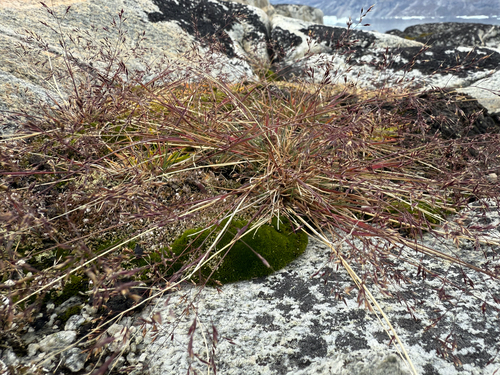
Edlund's Fescue

Festuca edlundiae

Also called Arctic Fescue

Edlund's Fescue
Photo: Ingvild Riska, CC BY 4.0
Family
Poaceae (Grass family)
Grows as
Grass, Perennial
Native range
Subarctic America
Climate
temperate

About

Festuca edlundiae, commonly known as Edlund's fescue, is a native, perennial, tufted grass of the High Arctic. It occurs in Alaska, the Canadian Arctic Archipelago, northern Greenland, far eastern Arctic Russia, and Svalbard. The specific epithet honours Canadian botanist Sylvia Edlund. The species was first formally described in 1995 by Susan Aiken, Laurie Consaul, and Leonard Lefkovitch.

Where it grows

F. edlundiae grows in High Arctic environments, typically on fine-grained or calcareous soils. It is well adapted to cold, short-season conditions and occurs in tundra habitats where few grasses can survive.

Other Festuca plants

Festuca floribunda · Festuca abyssinica · Banks Peninsula Blue Tussock · Festuca alatavica · Festuca aloha · Festuca alpina · Altai fescue · Wood Fescue · Amethyst Fescue · Festuca ampla · Festuca amplissima · Festuca argentina

Text excerpted from the Wikipedia article Festuca edlundiae by its contributors, under CC BY-SA 4.0; the excerpts are shared under the same licence.

Life form, climate and native range: World Checklist of Vascular Plants, Royal Botanic Gardens, Kew (CC BY 3.0), reformatted; see Plants of the World Online.

Credits & terms

Identify a plant

Point at a leaf or flower and snap. One plant in frame works best.

Your photo
Starting camera…