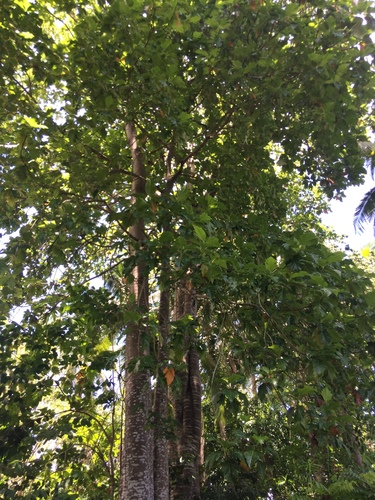
Antipolo is a large tree in the fig and mulberry family, endemic to the Philippines and a close relative of breadfruit. Its wild habitat is threatened, and it is valued for paper, shade, and edible seeds and fruit. Growing it is mainly a matter of giving a large tree warm, humid tropical conditions.
Family
Moraceae (Fig & mulberry family)
Grows as
Tree
Light
Full sun
Safety
Not known to be toxic
Edible
Yes, some parts
Native range
Philippines
Climate
wet tropical
About
Artocarpus blancoi is a species of large tree in the family Moraceae endemic to the Philippines. Its habitat (among seasonal forest or thicket growth in low-lying areas) is threatened.
It is locally known as tipolo, tipulo, or atipolo in Tagalog and the Visayan languages (Philippine Spanish: antipolo). Paper production and being a shade provider are its primary uses, although its seeds and fruits are edible and used in the same way as its close relatives, the breadfruit and the seeded breadfruit. The City of Antipolo got its name from the said tree.
Text excerpted from the Wikipedia article Artocarpus blancoi by its contributors, under CC BY-SA 4.0; the excerpts and the care summary drawn from them are shared under the same licence.
The care summary was written by AI (Claude, Anthropic) from the sources on this page, with general growing knowledge where they are silent. Check before relying on it.
Life form, climate and native range: World Checklist of Vascular Plants, Royal Botanic Gardens, Kew (CC BY 3.0), reformatted; see Plants of the World Online.