
Plant Wiki

The open plant encyclopedia

Know any plant.
Grow it well.

Snap a photo or search by any name to see how to care for it, where it comes from, whether it's safe, and a 3D model you can turn.

  • 13,000+plants with full pages
  • 365,000+plant species worldwide
  • 220+countries covered

Common in

See all

The plants people record most in your country, and ones that grow there wild.
What do you want to do?

Popular plants

Browse all plants

See them in 3D

All plants in 3D

Browse plants

Filter by what you want to do, shape, origin, country, care and safety.

Plant Wiki › Browse plants

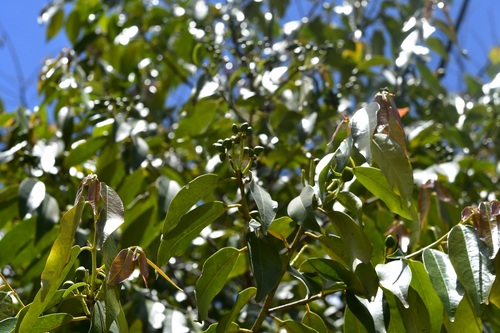
Prunus lundelliana

Prunus lundelliana
Photo: Neptalí Ramírez Marcial, CC BY 4.0

Prunus lundelliana is a small understory tree from montane cloud forests of southern Mexico and northern Central America, growing up to about 10 m, often beside streams. It is a wild species rather than a common garden plant, so care notes are based on its cloud forest habitat.

Family
Rosaceae (Rose family)
Grows as
Tree
Light
Part shade, Bright indirect
Water
Keep soil consistently moist but never waterlogged, as in its stream-side native habitat.
Soil
Moist, well-drained, humus-rich soil with good organic content.
Temperature
15–25 °C; protect below 5 °C, as it is a subtropical montane species.
How easy
Hard
Safety
Toxic: Seeds and other plant parts of Prunus species contain cyanogenic glycosides, which can release cyanide if seeds are crushed or chewed; the sources do not describe this for this species specifically.. Toxic to cats and dogs (ASPCA).
Edible
Yes, some parts
Native range
S. Mexico to Guatemala
Climate
subtropical

About

Prunus lundelliana, Spanish: taquicui, and nail wamal in the Tzeltal language, is a species flowering plant in the family Rosaceae native to southern Mexico and to northern Central America. It is a tree reaching 10 m. A common understory species in montane cloud forests, it prefers to grow on the sides of streams. It resembles Prunus tetradenia, but with significantly smaller leaves, and in the position of certain of the leaf glands. The wood is dense and darkly colored. The white 4 to 6 mm flowers are borne on axillary racemes. The fruit, a drupe, is black, 8 to 10 mm, with very little flesh.

Other Prunus plants

Prunus adenopoda · Red stinkwood · Prunus aitchisonii · Alabama cherry · Prunus alaica · Allegheny plum · American plum · Prunus amplifolia · Almond · Desert peach · Chickasaw plum · Prunus annularis

Text excerpted from the Wikipedia article Prunus lundelliana by its contributors, under CC BY-SA 4.0; the excerpts and the care summary drawn from them are shared under the same licence.

The care summary was written by AI (Claude, Anthropic) from the sources on this page, with general growing knowledge where they are silent. Check before relying on it.

Life form, climate and native range: World Checklist of Vascular Plants, Royal Botanic Gardens, Kew (CC BY 3.0), reformatted; see Plants of the World Online.

Pet safety from the ASPCA toxic and non-toxic plant lists.

Credits & terms

Identify a plant

Point at a leaf or flower and snap. One plant in frame works best.

Your photo
Starting camera…